The work

Everything here is finished enough to use. Things get listed when they work, not when they are announced.

Apps

What the screens actually look like

Captures of the builds you can download on this page, not mock-ups. The caption under each one says what you are looking at.

LOGGER · Records your shifts and works out what you're actually owed.
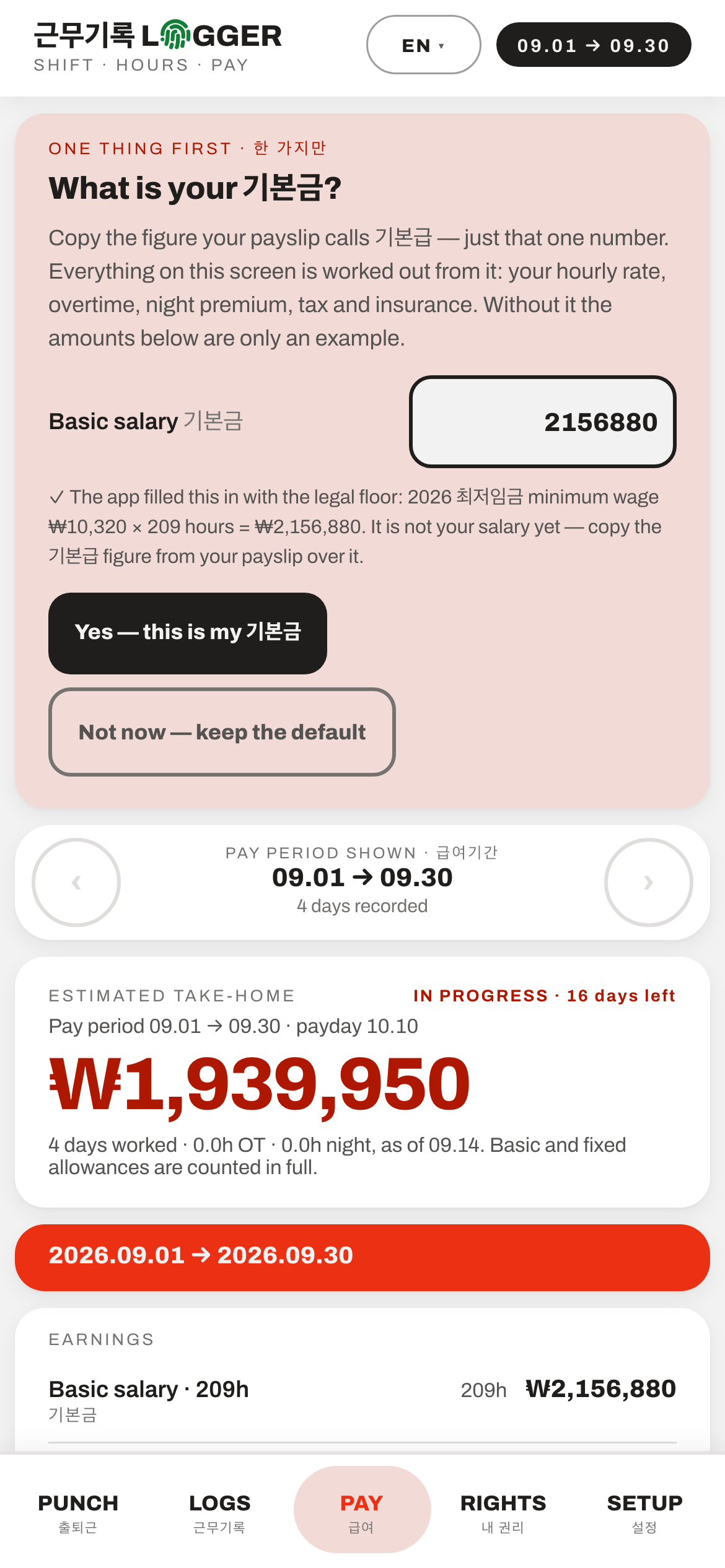
  • The PAY tab showing an estimated take-home of ₩1,939,950 for the 09.01 to 09.30 pay period, above an earnings list beginning with basic salary of ₩2,156,880 for 209 hours
    The month, worked out from your 기본급 and shown line by line before payday. The figures are from invented shifts.
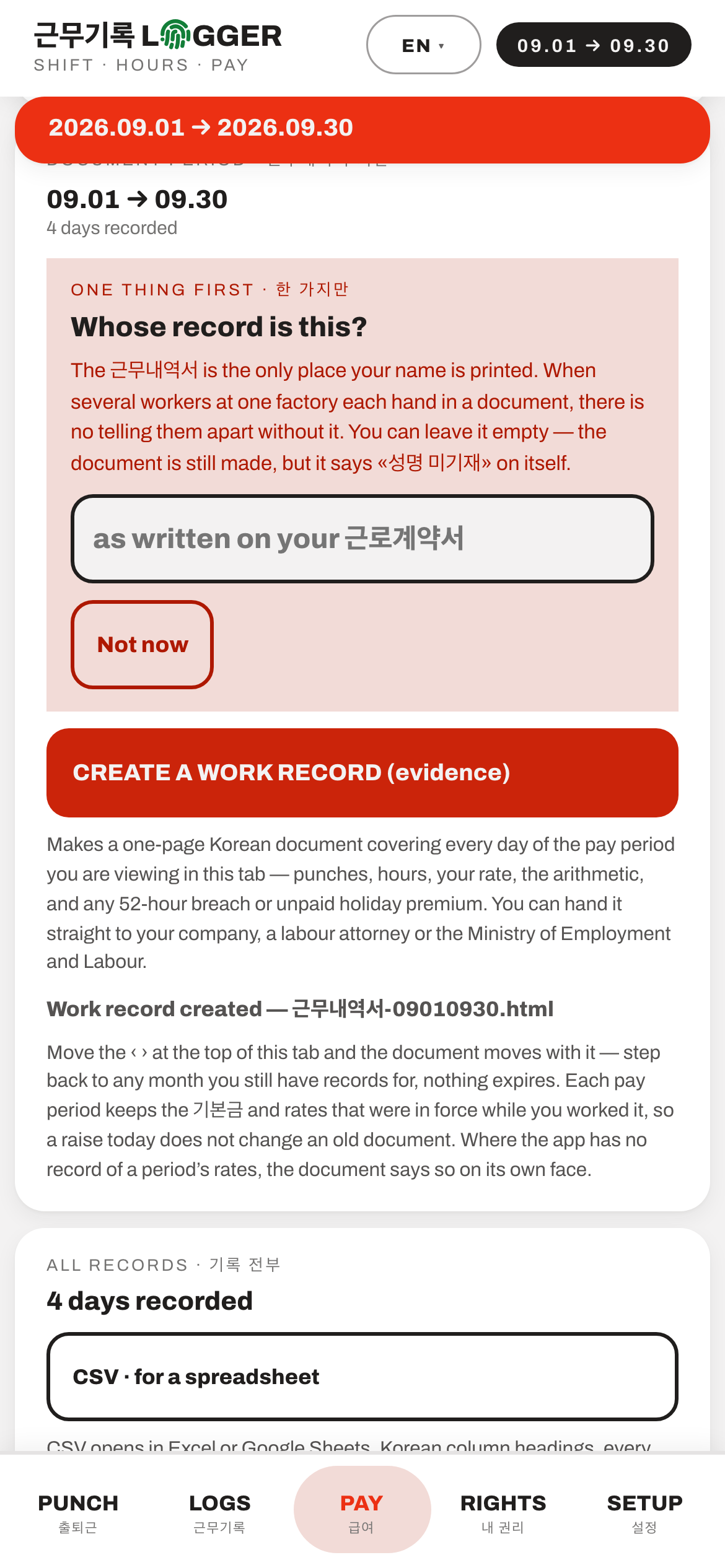
  • The foot of the PAY tab, with a red button reading CREATE A WORK RECORD (evidence) and a line confirming the file 근무내역서-09010930.html was created
    Making the 근무내역서. It asks for your name first, and tells you the document still works without one.

HANGIL · Teaches you the Korean the EPS‑TOPIK asks for, and keeps going after you pass.
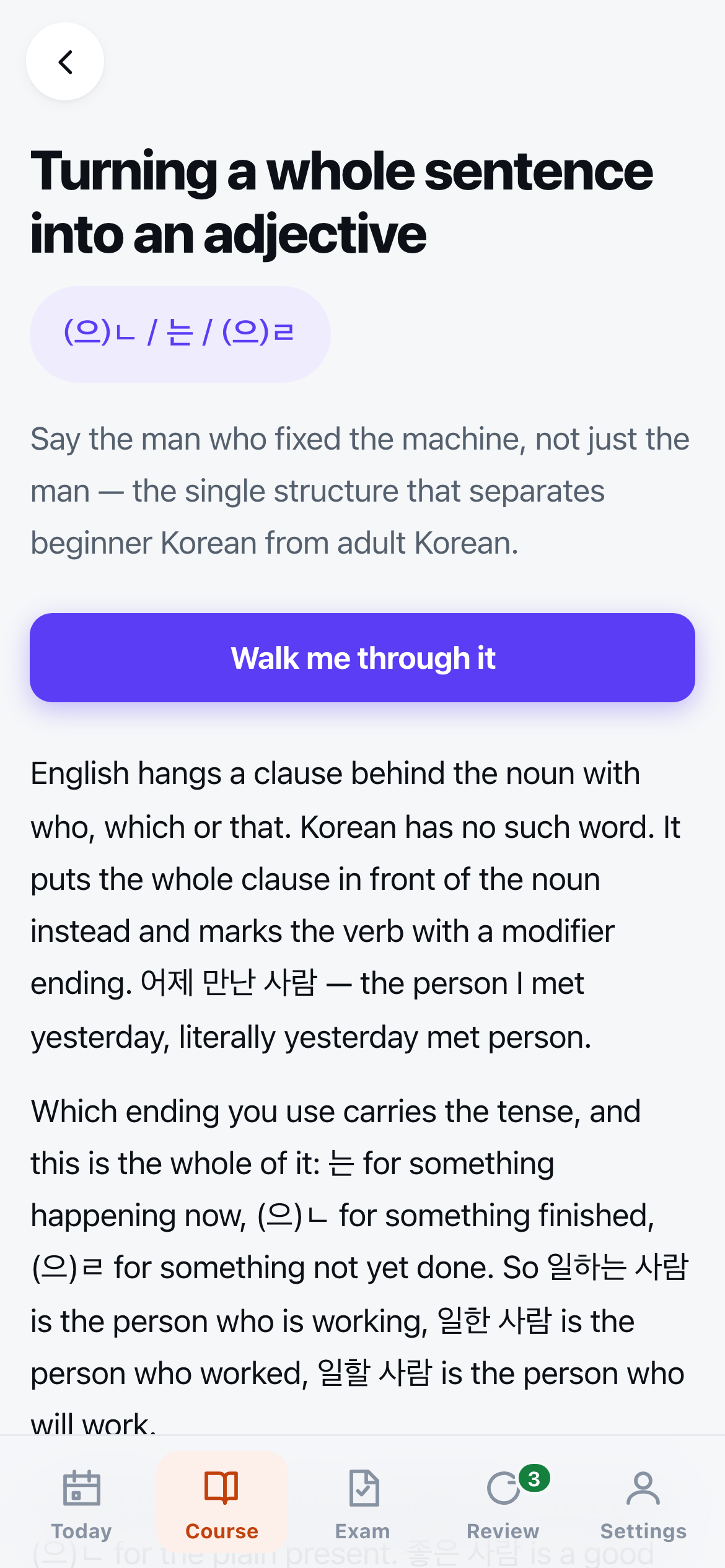
  • A lesson titled Turning a whole sentence into an adjective, with the forms (으)ㄴ, 는 and (으)ㄹ in a tinted pill beneath it, then a Walk me through it button, above several paragraphs explaining how Korean puts a whole clause in front of the noun
    A unit from the last level. The explanation comes first and is written out in full — the app is not a flashcard deck with a grammar note attached.
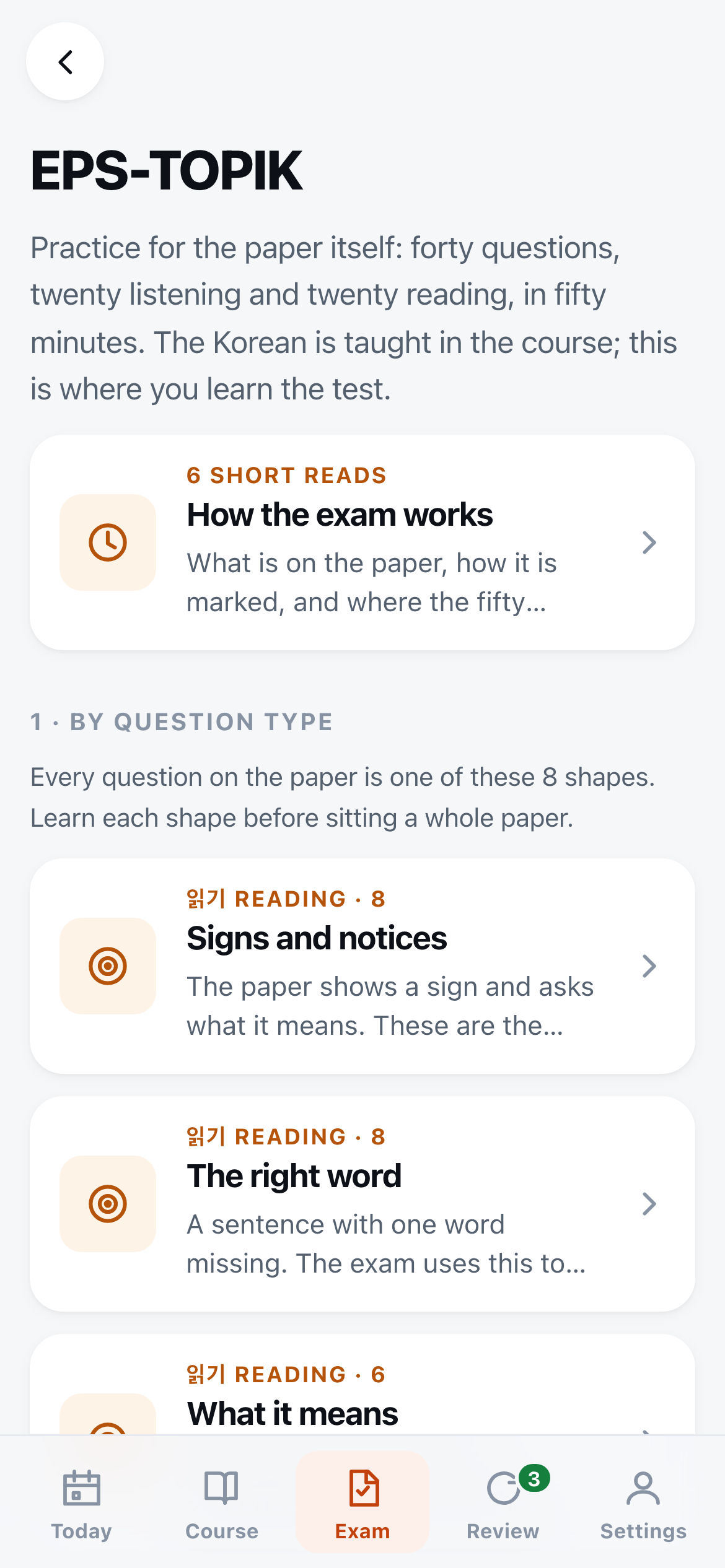
  • The EPS-TOPIK screen, explaining that it is practice for the paper itself — forty questions, twenty listening and twenty reading, in fifty minutes — and that the Korean is taught in the course. Below it a How the exam works reader, then a section headed 1 · By question type, starting with Signs and notices and The right word
    The exam side is exam preparation, kept apart from the course. It starts with each question type the paper uses, so nothing on the day is a surprise format, and then moves on to full timed papers. The day-streak and review counts visible in these captures come from a sample of progress made while taking them, not from anyone's study record.
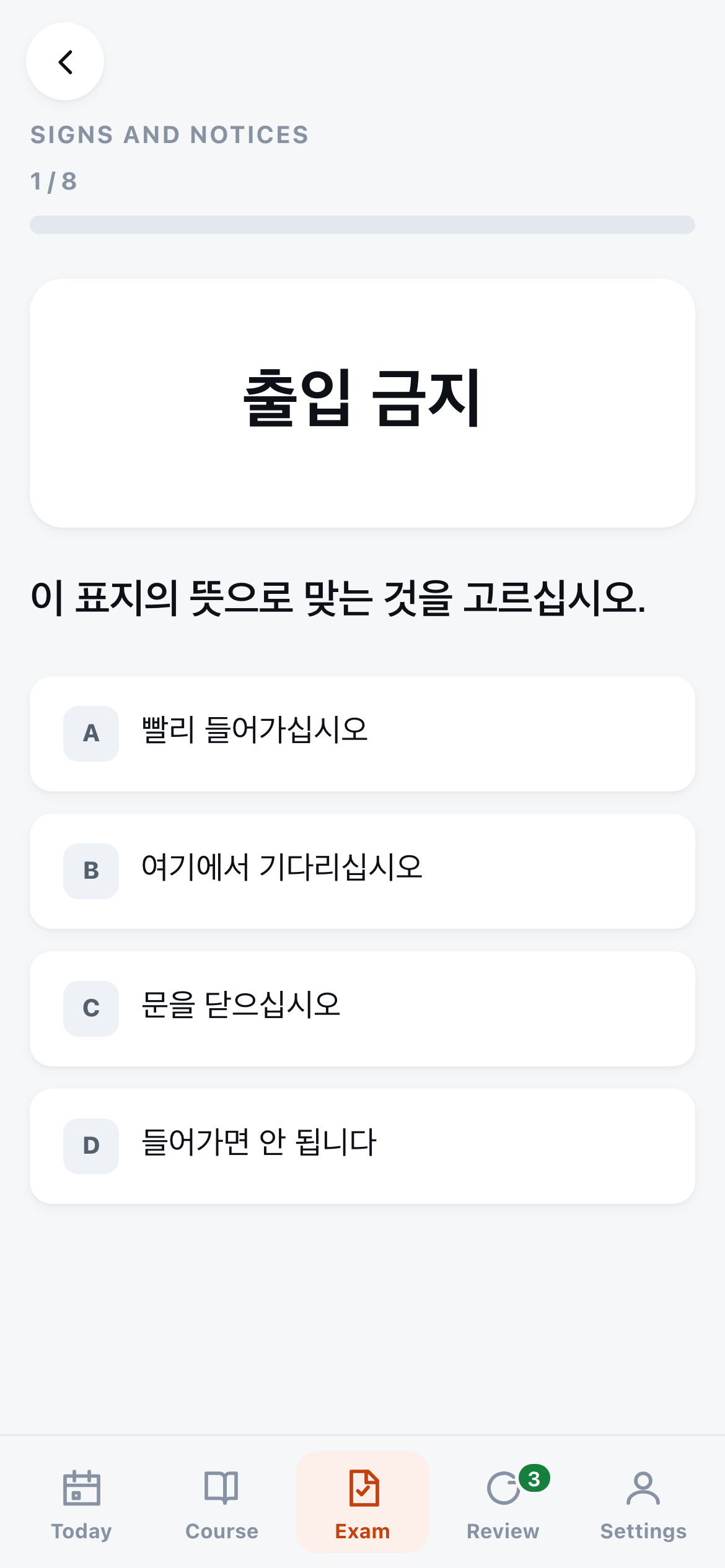
  • A practice question showing the Korean sign 출입 금지 in a bordered box, with the Korean instruction to choose the correct meaning and four Korean answer options below it
    A sign question. Where the paper photographs a sign, this prints the sign's own words — the words are the thing being tested. Questions built on a drawing have a drawing.
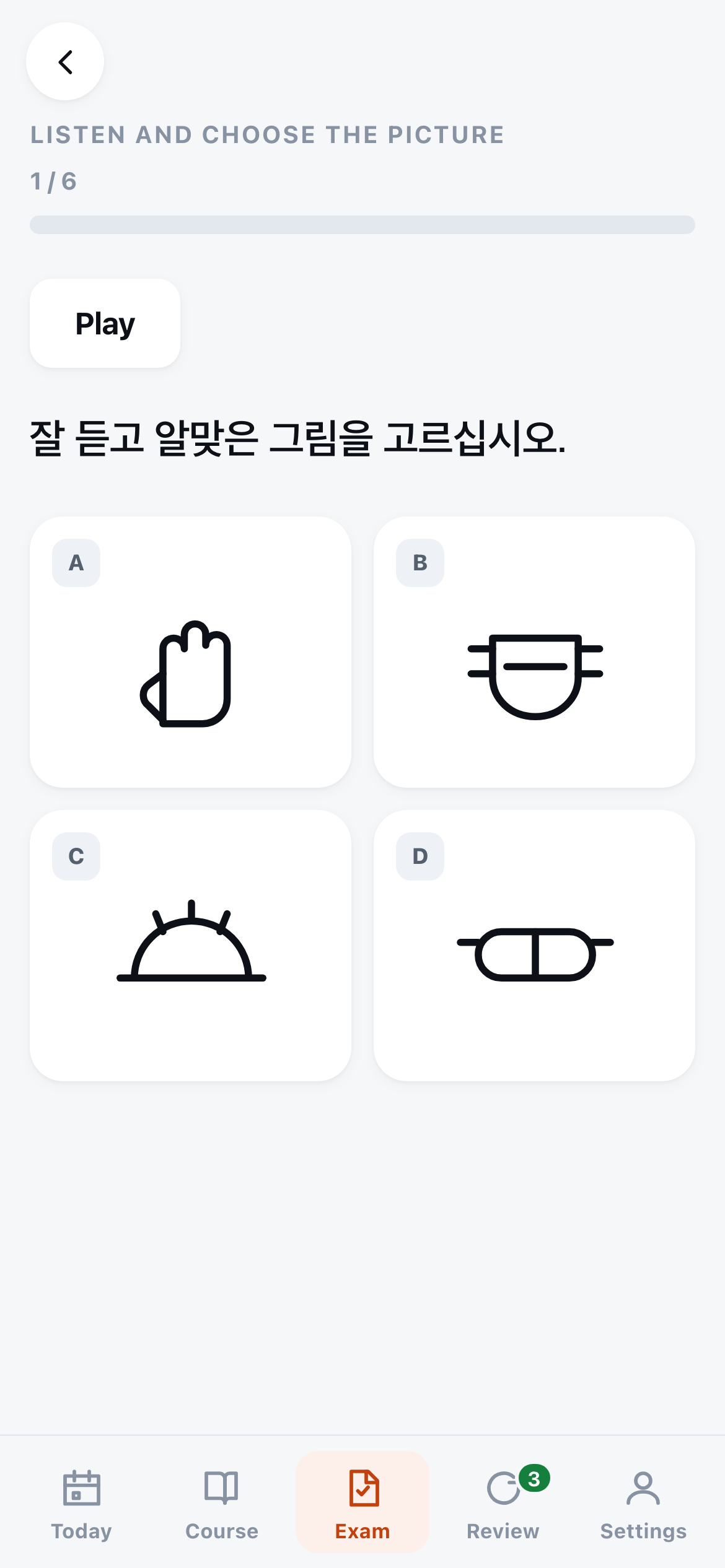
  • A listening question headed in Korean, asking the reader to listen and choose the correct picture, above a two-by-two grid of four line drawings labelled A to D — a safety helmet, a glove, safety goggles and a face mask
    A picture question. You hear one Korean sentence and pick the drawing it describes, with nothing written down to fall back on. The drawings are original line art made for this app.
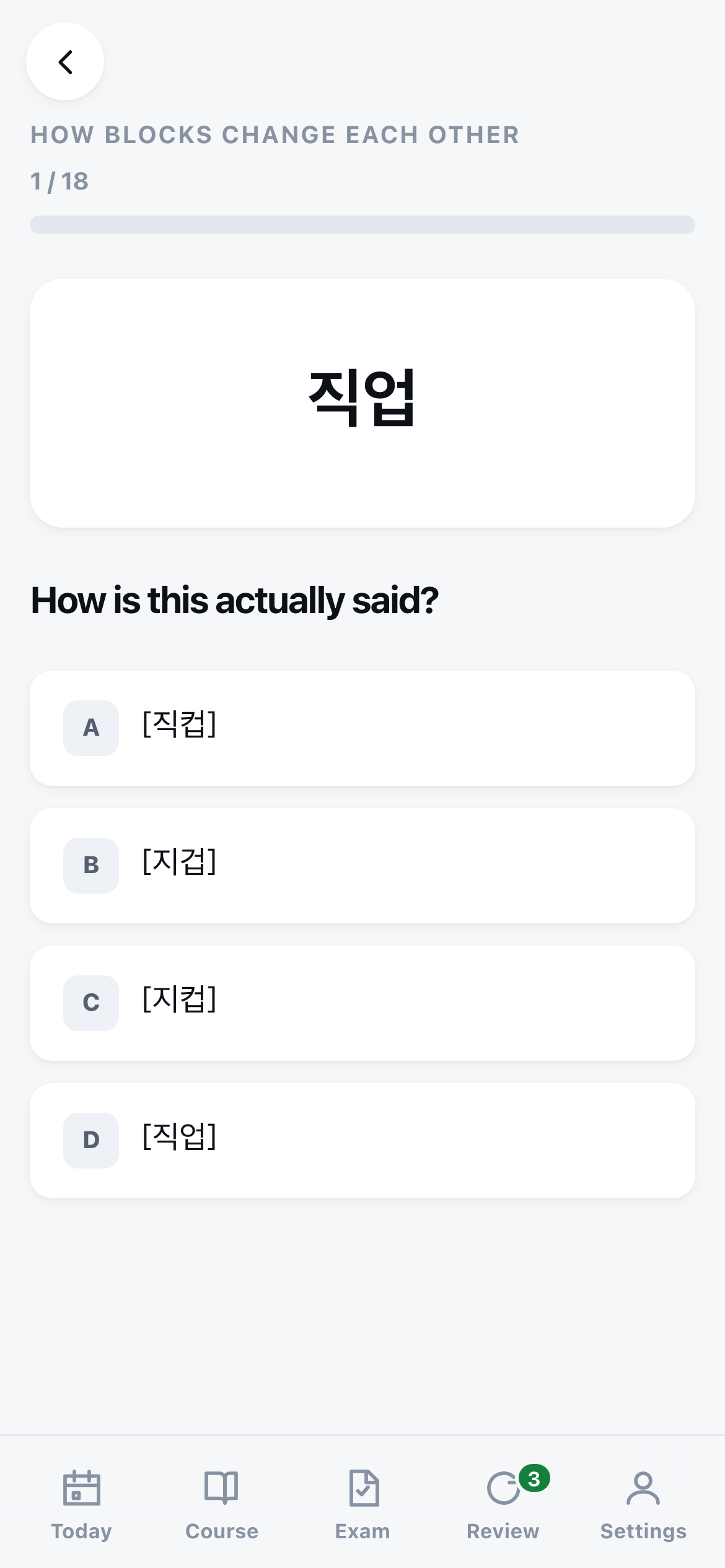
  • A question from the alphabet lessons headed How blocks change each other. It shows the word 직업 and asks how it is actually said, with four options in brackets — 직컵, 지겁, 지컵 and 직업 as it is written
    The last alphabet lesson is about how blocks change each other, because a word you can read on paper often sounds quite different when spoken. 직업 is said 지겁, and one wrong option is always the word said exactly as it is written.
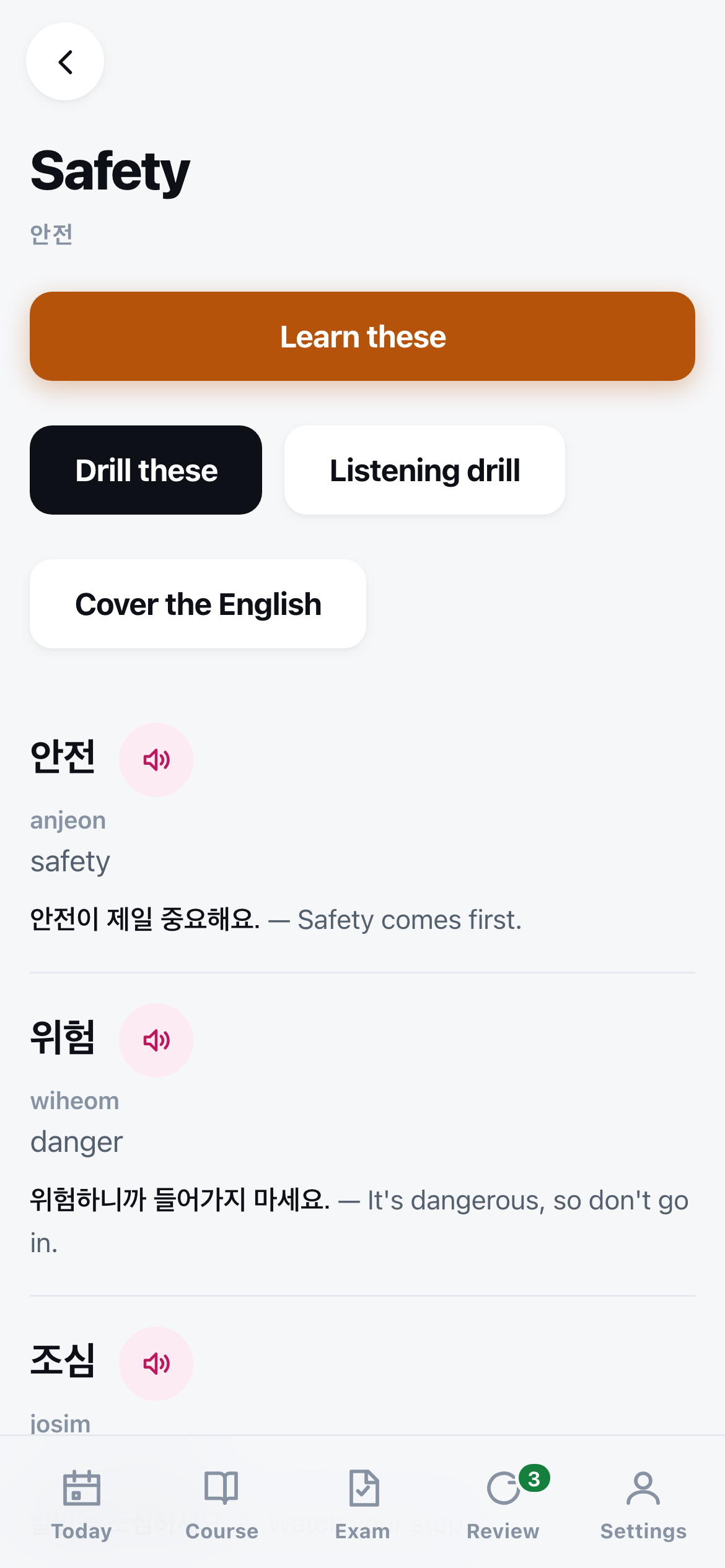
  • The Safety vocabulary set, listing 안전, 위험 and 조심 with romanisation, English meaning and a Korean example sentence under each, with a round play button beside every word
    Vocabulary, grouped by where you will hear it. Every word and sentence has a play button.